You’ve finished your final stretch. Your breathing begins to slow. The physically demanding part of your yoga practice is over.
It can be tempting to roll up your mat and move on with your day.
But there’s usually one more pose: Savasana.
Often called Corpse Pose, the final relaxation pose, or simply the resting pose at the end of yoga, Savasana asks you to do something surprisingly difficult—stop trying.
There’s no deeper stretch to reach. No balance to maintain. No complicated alignment to perfect.
You simply get comfortable, become still, breathe naturally, and allow the practice to come to a quiet close.
Here’s how to practice Savasana, why yoga classes commonly finish with it, and how to make the pose more comfortable if lying flat doesn’t work for your body.
What Is Savasana?
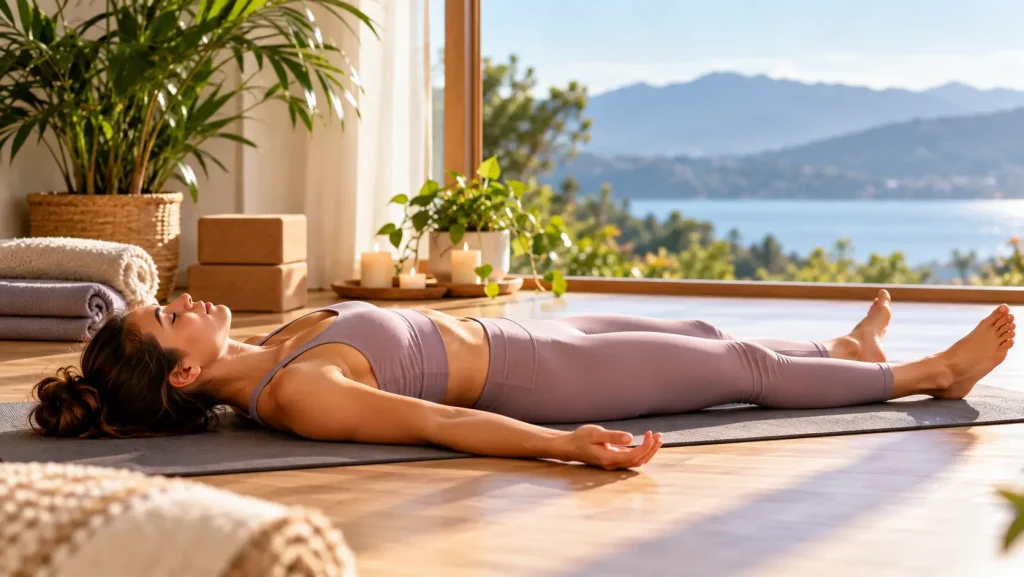
Savasana (Shavasana) is a resting yoga posture traditionally practiced lying on your back, usually at the end of a yoga session.
The Sanskrit name is commonly translated as Corpse Pose.
In its basic form, you lie comfortably with your legs relaxed, arms resting beside you, and eyes closed or softly covered.
That sounds easy.
For many people, it isn’t.
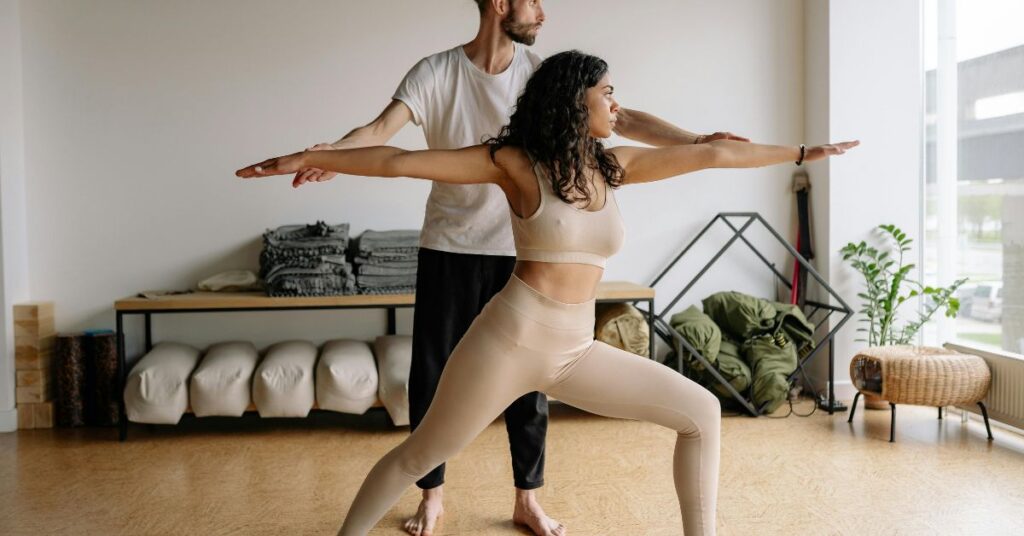
Holding Warrior II requires obvious physical effort. Savasana presents a different challenge: remaining still without feeling that you need to accomplish something.
Instead of actively controlling your body, the intention is to reduce unnecessary muscular effort and allow your breathing to settle naturally.
Why Is Savasana Usually the Final Yoga Pose?
A yoga session often progresses from movement toward stillness.
You may have spent the previous 20, 40, or 60 minutes standing, balancing, folding, twisting, or moving through a flow.
Savasana changes the pace completely.
Rather than abruptly finishing your final active pose and immediately returning to your phone, work, or daily responsibilities, you spend a few minutes quietly transitioning out of the practice.
Think of it less as a reward for finishing yoga and more as part of the practice itself.
It’s an intentional period of rest.
If you’re still developing your practice, YogaMelt’s guide to Beginner Yoga Flow for Flexibility and Relaxation can help you see how restorative moments fit alongside more active poses.
How to Do Savasana Step by Step
You don’t need advanced flexibility or special equipment.
1. Lie Down Comfortably
Lie on your back on your yoga mat.
Extend your legs in front of you and allow your feet to fall naturally outward.
You don’t need to deliberately position your toes.
2. Relax Your Arms
Place your arms beside your body with some space between your arms and torso.
Turn your palms upward if that feels comfortable.
If it doesn’t, let your hands rest however they naturally want to.
3. Adjust Your Head and Neck
Allow your head to rest in a neutral, comfortable position.
Your neck shouldn’t feel strained.
If lying flat makes your neck uncomfortable, a thin folded blanket can provide additional support.
4. Close or Soften Your Eyes
Closing your eyes can reduce visual stimulation.
If closing them feels uncomfortable, keep them slightly open and let your gaze remain soft.
5. Let Your Breathing Become Natural
You don’t need a complicated breathing technique.
Notice your breathing and gradually allow it to happen without consciously controlling every inhale and exhale.
6. Release Unnecessary Tension
You can mentally scan your body from your feet upward.
Notice your legs.
Your abdomen.
Your hands.
Your shoulders.
Your jaw.
Your forehead.
Rather than commanding each area to relax, simply notice whether you’re holding tension that you no longer need.
7. Remain Still for a Few Minutes
Give yourself time.
For many everyday practices, around 5–10 minutes can be a practical starting point.
A short practice may end with less; a longer class may devote more time to Savasana.
There’s no universal timer you must obey.
How to Make Savasana More Comfortable
One of the biggest misconceptions about Savasana is that everyone should lie perfectly flat on the floor.
Comfort matters more than reproducing a photograph.
Put Support Under Your Knees
If lying with straight legs feels uncomfortable around your lower back, place a bolster, pillow, or rolled blanket underneath your knees.
Allowing the knees to bend slightly can make the position much easier to maintain.
Use a Blanket
Remaining still can make you feel cooler than you did during the active portion of your practice.
Cover yourself with a blanket before settling into the pose.
Support Your Head
A thin folded blanket underneath your head may be helpful if your neck doesn’t feel comfortable against the floor.
Avoid using so much height that your chin is pushed strongly toward your chest.
Use an Eye Pillow
If you find light distracting, an eye pillow or soft folded cloth can make the environment feel calmer.
Try Side-Lying Savasana
You don’t have to lie on your back.
Pregnancy, back discomfort, breathing considerations, or simple personal preference may make a supported side-lying position more appropriate.
Use cushions or bolsters as necessary to make yourself comfortable.
What Should You Think About During Savasana?
Ideally, you don’t need to think about anything in particular.
But that’s easier said than done.
You may suddenly remember an email.
Your grocery list.
Something awkward you said three years ago.
What you’re making for dinner.
That’s normal.
Savasana isn’t a test of whether you can completely empty your mind.
When you notice yourself following a train of thought, gently return your attention to something simple.
You might notice:
- your natural breathing
- physical contact between your body and the floor
- sounds around you
- areas where you’re still holding tension
- the sensation of your abdomen rising and falling
The thought itself isn’t the problem.
You don’t need to fight it.
Notice it and allow your attention to return.
Why Is Savasana Sometimes Difficult?
Interestingly, some people find a challenging standing pose easier than lying still.
There are several common reasons.
“My Mind Won’t Stop”
You’re suddenly still, but your mind hasn’t received the memo.
Don’t try to forcibly stop thinking.
Instead, give your attention somewhere neutral to return—your breath, sounds in the room, or a gentle body scan.
“I Feel Restless”
Start smaller.
You don’t have to remain still for 15 minutes on your first attempt.
Try two or three minutes and gradually spend longer there if you find it useful.
“I Keep Falling Asleep”
Falling asleep occasionally isn’t a disaster.
But Savasana is generally practiced as conscious rest rather than intentionally taking a nap.
If you regularly fall asleep immediately, experimenting with a shorter Savasana or practicing earlier in the day may help you remain aware.
“Lying Flat Hurts My Back”
Change the position.
Place support underneath your knees, bend your knees with your feet on the floor, or try lying on your side.
A relaxation pose shouldn’t require you to tolerate pain.
“Doing Nothing Feels Pointless”
That’s part of what makes Savasana interesting.
Much of modern life rewards constant activity.
Savasana deliberately removes the next task for a few minutes.
How Long Should You Stay in Savasana?
There isn’t one perfect duration.
For a typical home practice, 5–10 minutes is a reasonable range to experiment with.
If you only have a short time available, even a few quiet minutes can provide a clear ending to your practice.
The important point is not to turn relaxation into another performance metric.
Longer isn’t automatically better.
Choose an amount of time that allows you to settle without making the pose something you dread.
How to Come Out of Savasana
How you leave the pose matters too.
Avoid going from complete stillness to standing up as quickly as possible.
Instead:
- Deepen your breathing gradually.
- Begin moving your fingers and toes.
- Stretch gently if that feels good.
- Bend your knees.
- Roll comfortably onto one side.
- Pause there briefly.
- Use your hands to help yourself return to a seated position.
Give yourself a moment before returning to normal activity.
Can You Practice Savasana Without Doing Yoga First?
Absolutely.
Although it’s traditionally associated with the end of a yoga session, you can practice a comfortable resting position independently.
For example, you might use a short Savasana:
- after another workout
- after sitting at a desk for hours
- during a quiet break
- after meditation
- as part of an evening relaxation routine
If you’re looking specifically for a nighttime practice, YogaMelt’s Easy Yoga Poses to Do in Bed Before Sleep offers additional gentle options.
Savasana vs. Meditation: Are They the Same?
Not exactly.
Savasana is a physical yoga posture—a resting position.
Meditation refers more broadly to practices involving attention and awareness and can be done seated, walking, lying down, or in other positions.
However, there can certainly be overlap.
During Savasana, you may practice awareness of your breath, bodily sensations, or sounds without reacting to them.
So Savasana can have a meditative quality without the two terms meaning precisely the same thing.
Common Savasana Mistakes
Trying Too Hard to Relax
This sounds contradictory, but relaxation isn’t something you need to force.
Get comfortable and give it time.
Staying Uncomfortable
If your back hurts or your neck feels strained, adjust your position.
Props are there to help.
Treating Thoughts as Failure
Thinking doesn’t mean you’ve ruined Savasana.
Notice that your attention wandered and gently return.
Checking Your Phone
If possible, give yourself those final few minutes without immediately returning to notifications.
Skipping It Because You’re Busy
If you don’t have 10 minutes, do three.
A shorter Savasana is still a clearer ending than jumping directly from your final pose into the rest of your day.
Other Yoga Poses to Practice Before Savasana
Savasana can follow virtually any yoga sequence.
If you’re building your own practice, you might explore some of YogaMelt’s existing pose guides, including:
Finish whichever sequence you choose with a few minutes of comfortable stillness.
Savasana FAQ
What is the final relaxation pose in yoga called?
The final relaxation pose is usually called Savasana or Shavasana, commonly translated as Corpse Pose. It’s generally practiced lying comfortably on the back at the end of a yoga session.
Why do yoga classes end with Savasana?
Savasana provides a quiet transition from active yoga practice into rest. Instead of abruptly ending after the final movement, practitioners spend several minutes still and breathing naturally.
How long should Savasana last?
There’s no mandatory duration. Around 5–10 minutes is practical for many home practices, but shorter or longer periods can also be appropriate.
Is it okay to fall asleep during Savasana?
It happens, particularly when you’re tired. Savasana is usually intended as conscious rest rather than sleep, but accidentally drifting off doesn’t mean you’ve done something wrong.
What if I can’t stop thinking during Savasana?
You don’t need to stop every thought. Notice when your attention wanders and gently return to your breathing, physical sensations, or sounds around you.
Can beginners practice Savasana?
Yes. In fact, Savasana requires no advanced flexibility. Beginners who find lying flat uncomfortable can use blankets, bolsters, cushions, or a side-lying variation.
YogaMelt’s 10 Beginner Yoga Poses for Daily Practice is a useful next step if you’re building a beginner practice.
Is Savasana the same as sleeping?
No. Sleep involves losing normal waking awareness. In Savasana, the intention is generally to remain comfortably awake while resting.
Can I practice Savasana every day?
A comfortable resting pose can be incorporated into a regular yoga practice. Adjust the position and duration according to your needs.
Final Thoughts
Savasana might be the least visually impressive pose in yoga.
That’s part of its value.
There’s nothing to demonstrate, nowhere deeper to stretch, and no balance to prove.
For a few minutes, your only job is to get comfortable, become still, and let your breathing happen.
So the next time you reach the end of your yoga practice, resist the urge to immediately roll up your mat.
Lie down.
Get comfortable.
And give the final pose the same attention you gave everything that came before it.
Sonu is a passionate yoga teacher with over 6+ years of experience helping individuals find balance, strength, and inner peace through the transformative power of yoga. As the creator of Pure Yoga Vibes, Sonu shares expert insights, inspiring practices, and a wealth of knowledge to support your wellness journey. Dedicated to creating a space for growth and mindfulness, Sonu’s mission is to make yoga accessible and enjoyable for everyone. For inquiries or collaborations, feel free to reach out at contact@pureyogavibes.com.